
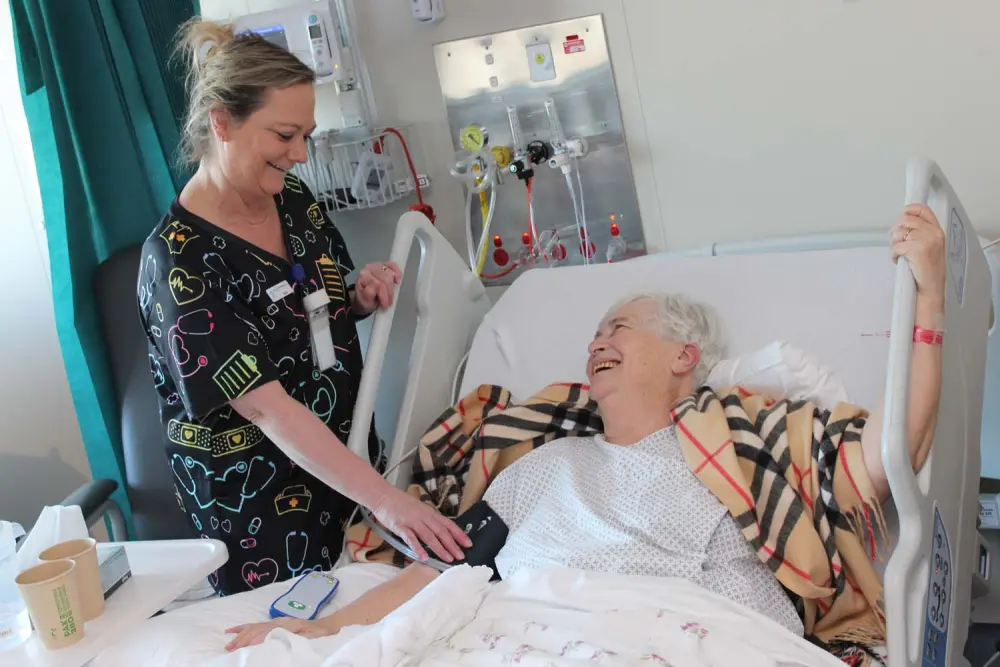
Some simple steps to keep yourself safe during your stay in hospital
Making your hospital stay safer
The following simple safety tips help you stay informed, involved and protected during your hospital stay, supporting safe care and recovery.
Hospital stays check list:
Confirm your identity and allergies: Always wear your ID and tell staff if details are incorrect or if you have allergies.
Manage your medicines safely: Share all medication and allergy information and ask questions about how and when to take them.
Reduce risks while in hospital: Help prevent falls, pressure injuries, infections and blood clots by moving safely, staying active, and asking for assistance.
Speak up about concerns: Tell staff if something feels wrong and escalate concerns using the Listen UP! process if needed.
Prepare for discharge and partner in care: Understand your care plan, medications and follow‑up, and stay involved in decisions about your healthcare.
Identification (ID)
- You will be given an ID to wear throughout your stay in hospital
- We will ask continuously throughout your stay for you to verify your ID before you have a procedure, have medicine or given blood
- Tell us if your information is wrong
- Tell us if you have any allergies. We will give you a red armband to alert staff to your allergy.
Your medicines
- Tell us if you have a medication allergy or if you have had a serious reaction to any medicines
- Tell us all the medicines you are taking including inhalers, patches, injections, non-prescription and natural therapies
- Ask us questions about your medicine including possible side effects, how long and when you need to take it
Preventing falls
- Tell us if you have fallen before coming into hospital
- Take extra care in the bathroom
- Use a walking aid, if you need one
- Wear well-fitted, non-slip footwear
- Some medicines may make you feel unsteady or dizzy, tell us if you need help moving around
- Remember to wear your glasses if you have them
- Use your call bell to alert staff if you need help moving around.
Preventing pressure injury
- Keep moving even in bed
- Call us if you are uncomfortable
- Ask us to help you to change position
- We can work with you on ways to relieve pressure
Preventing infection
- Wash your hands or use sanitiser hand-gel after visiting the toilet, sneezing, coughing, and before all meals
- Staff will wash their hands or use hand sanitiser before coming to your bedside, if they have forgotten, you can remind them
- Tell us if you have diarrhoea, vomiting or cold/flu symptoms
- If visitors are unwell ask them not to visit you until they feel better
Preventing blood clots
- Wear your hospital stockings if asked to and move as often as you can
- Try to do simple leg and ankle exercises
- Drink fluids as recommended
- Take blood-thinning medication if advised
Leaving hospital
- Have you got all the information you need to be safe at home?
- Has your medicine changed, has someone explained what they are, how and when to take them?
- Do you know who to contact if you have any questions or concerns when you get home?
- Do you know when your next appointment is?
Listen UP!
- Patient / Carer escalation of care
- We recognise that you know yourself or your loved one the best so if you notice a worrying change, are worried about your treatment or feel something is not quite right
Talk to the person looking after you
- If you are still concerned, ask to speak to the person in charge
- If you are still concerned call the health services coordinator on (03) 5671 3384 anytime day or night and state your concerns. They will be with you shortly
Partnering in your health care
- Ask us questions, ask us to “tell you more”
- Tell us if there is anything you don't understand
- We ask you to join in and ask questions at the bedside handover
- Let us know what you want and what you do not want
- Have your family be involved as much or as little as you decide
- Ask us about our Partnerships in Care Program