
Having experienced it firsthand, Georgie Appleyard knows that an early diabetes diagnosis can make all the difference, enabling prompt care and reducing the risk of health complications.
Early diagnosis vital to managing diabetes well
November 11, 2026
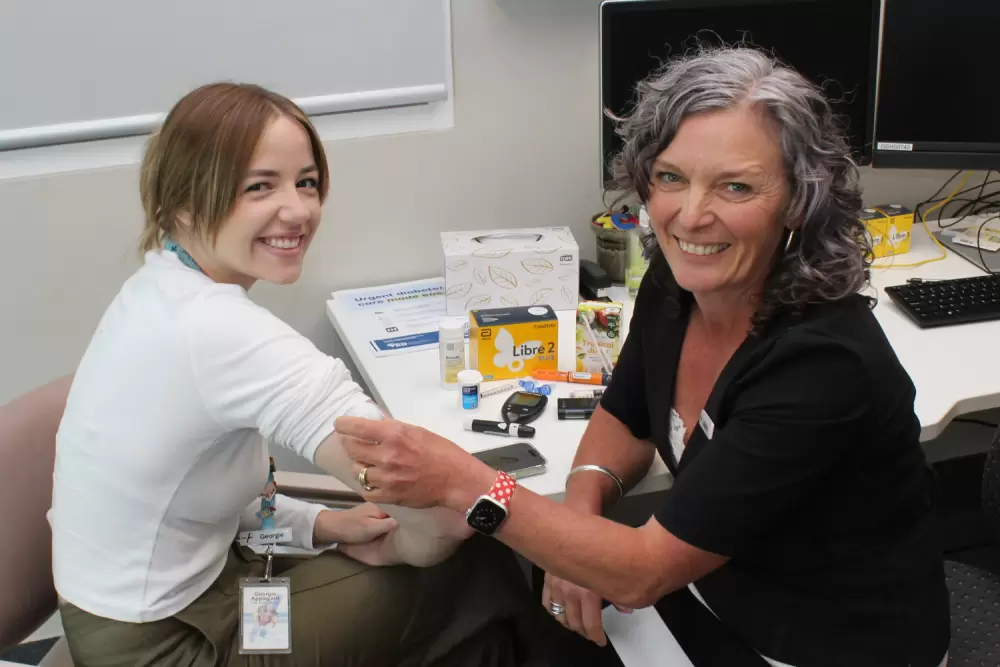
Georgie Appleyard, who lives with diabetes, receives a new continuous glucose monitoring device from Andrea Curtis, Credentialled Diabetes Educator, at Leongatha Memorial Hospital.
As an 11-year-old, she endured months of illness - which was at times life-threatening - before her Type 1 diagnosis.
Now the South Gippslander, who is cared for by Leongatha Memorial Hospital’s Diabetes Education team, is a passionate advocate for public education about diabetes.
Georgie is hoping people will not only learn the symptoms of diabetes but also the challenges people with diabetes face daily.
She constantly monitors her blood glucose levels, calculates how her diet will impact those levels, and gives herself multiple insulin injections a day – all to stay as well as possible and ultimately, to stay alive.
Managing diabetes can also be expensive and cause financial strain due to the cost of equipment, medication and care.
Georgie is required to carry insulin, needles, blood glucose monitoring equipment and emergency glucose supplies with her at all times. Despite careful management, fluctuations in blood glucose levels can lead to symptoms including constant fatigue, dizziness, blurred vision, migraines, excessive thirst and difficulty concentrating.
“Diabetes affects my mental health as well. I’m exhausted from the 50 extra decisions I have to make every day about diet and anxiety about other diabetes risks. There's no clocking out with diabetes,” she said.
“Miscalculating carbohydrate intake, hot weather, physical activity, illness, stress and hormones can affect my blood glucose levels and these fluctuations can occur unexpectedly. It’s a constant balancing act trying to keep healthy.
“There are lot of stereotypes around diabetes and they’re very frustrating. Diabetes affects individuals differently and many people just assume ‘diabetes’ is just one illness, not multiple types. Some people think it’s just because you eat too much cake but it’s far from that.”
Georgie is supported by Andrea Curtis, Credentialled Diabetes Educator, at Leongatha Memorial Hospital, run by Bayside Health.
“To have the care and knowledge of Andrea so close to home is comforting, and saves me having to travel to Melbourne more often for care,” Georgie said.
“I receive advice about managing my diet, measuring insulin and the latest monitoring technology so that I can live my best life possible.”
Andrea said diabetes is a condition where there is too much glucose in the blood. Over time high glucose levels can damage blood vessels and nerves, resulting in long-term health complications including heart, kidney, eye and foot damage.
“Early action on diabetes is the theme for World Diabetes Day on 14 November, and that’s why the Diabetes Educators across Bayside Health Regional are here to help people manage their diabetes and live as fulfilling lives as possible,” she said.
“If you’re concerned about your risk of having diabetes, please see your General Practitioner and they’ll be able to refer you for diabetes education if you’re diagnosed.”
To learn about our Diabetes Education services, go to: